
A SaaS boilerplate is a prebuilt codebase that includes authentication, payments, and a marketing layout. The boilerplates below are the eight options we reviewed by hand. We opened the official documentation and current pricing, checked the underlying stack, and scored each option on features, value, and maintenance.
No single boilerplate is best for every use case. What works best depends on whether you are building a simple solo MVP or complex software with customer workspaces.
Our take: ShipFast gets you live fastest if you are building a solo Next.js project on a budget. If you need team workspaces, invitations, and multi-tenant billing, supastarter is your best choice.
Want to pick a boilerplate based on your product requirements? Read How to choose a SaaS boilerplate.
| Product | Price | Score | Best for | Actions |
|---|---|---|---|---|
| $299 | 4.6 | Small teams building multi-tenant SaaS with roles and multiple payment providers. | ||
| $159 | 4.6 | Founders launching Next.js directories with built-in paid submissions. | ||
| $199 | 4.6 | Laravel developers who want Filament admin and Livewire or Vue. | ||
| $349 | 4.5 | TypeScript founders building B2B SaaS with team workspaces and role permissions. | ||
| $449 | 4.4 | Django developers starting a B2B SaaS with teams and Stripe billing. | ||
| $199 | 4.3 | Solo founders building a simple Next.js SaaS with Stripe billing. | ||
| $249 | 4.2 | Founders wanting a designed Next.js marketing site with an MDX blog. | ||
| $188 | 4.1 | Indie founders building Next.js content or AI sites for individual users. |








Prices last checked:
How we ranked these boilerplates
To rank these boilerplates, we look at the official documentation, live pricing pages, and repository structures. We test what each tier includes: authentication, database support, payment providers, and extras such as team workspaces or an admin dashboard. When possible, we clone the repository and run the local setup steps.
We score each boilerplate on five dimensions: Features, Value, Docs & updates, Ease of use, and Community & support. The Huzzler Score is the unweighted average of those five ratings. Every price comes from the official vendor pages, and the comparison table above shows the date we last checked them.
This list is ordered by Huzzler Score, highest first. That ranking reflects overall codebase quality and maintenance. Read the "Best for" line and the tradeoffs for each option before buying.
1. supastarter: power-user B2B features with a Turborepo learning curve
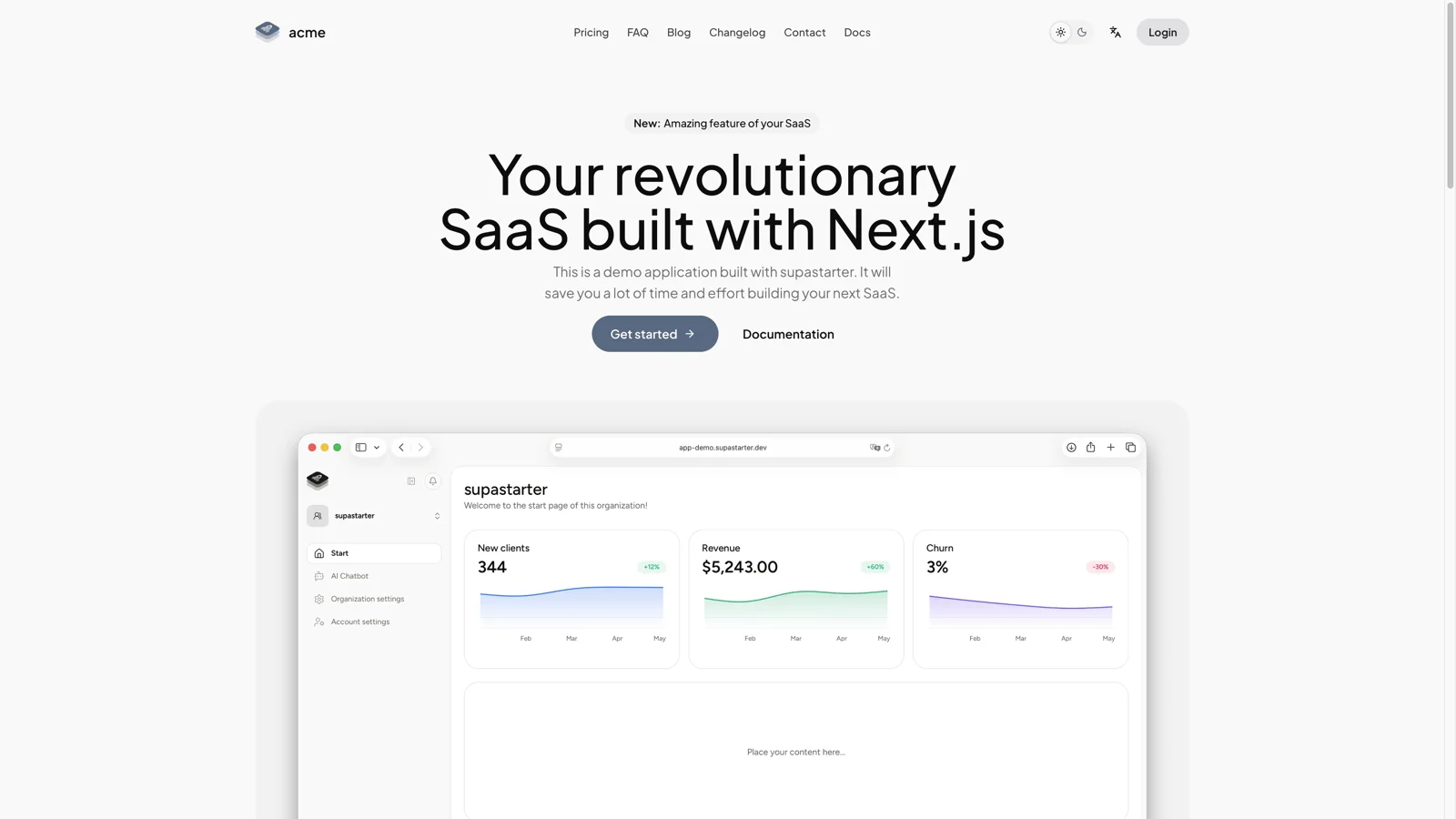
supastarter is a Turborepo monorepo from Jonathan Wilke for founders who sell SaaS to company teams. Team workspaces, invitations, and five payment providers are part of the codebase on Next.js, Nuxt, and TanStack Start. That saves weeks of setup. If you only want a simple landing page, pick ShipFast.
What stood out
- Prebuilt team workspaces with invitations and member permissions
- Five payment providers ready to connect, not only Stripe
- Includes an administrative dashboard and full language translations
- Active Discord community with daily updates in the public changelog
What could be better
- Monorepo structure demands extra time to learn before launch
- Each frontend framework requires purchasing a separate license
- Upstream bug fixes require rebasing your code repository manually
License and pricing
Solo is $299 once for one developer seat and unlimited projects. Startup is $799 for five seats, and Agency is $1,499. There are no refunds because code access is delivered immediately.
Keep in mind: When you buy supastarter, licenses are sold per framework. If you buy the Next.js edition today and decide to switch to Nuxt or TanStack Start later, you will have to purchase a second full license.
2. Dirstarter: purpose-built for directory sites, not for B2B SaaS
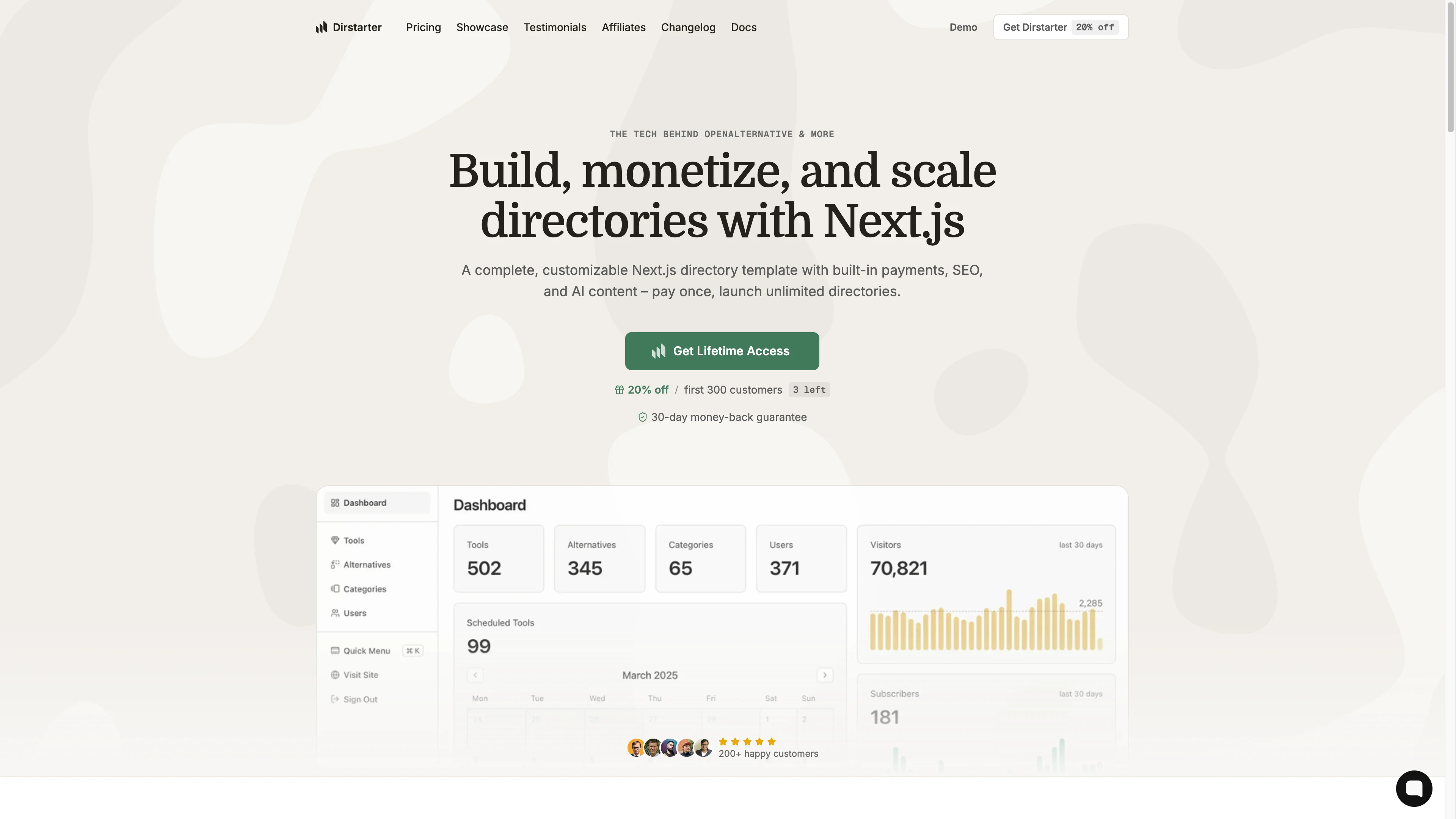
Dirstarter is the codebase behind OpenAlternative, packaged by Piotr Kulpinski for founders who want to launch a tool directory or a listing site. It handles listing submissions, category filters, and sponsor monetization out of the box. If you need seat-based team accounts, look elsewhere.
What works well
- Prebuilt listing models, paid submissions, and tool claiming
- One payment covers unlimited commercial and personal directory projects
- Active repository maintenance with over 500 commits in the past year
- Built-in artificial intelligence helpers draft tool summaries from URLs
What to watch out for
- Requires a hosted PostgreSQL database
- Lacks team workspaces and recurring seat-based subscriptions
- Upstream updates require merging Git commits manually into your branch
How pricing works
Basic is $159 once (marked down from $199) for the complete Next.js boilerplate and unlimited projects. Pro is $199 and adds Discord access, priority help, and developer agent skills.
Plan ahead: Dirstarter is built specifically for directories. If you later decide to add team workspaces, invitations, or seat-based billing, you will have to build those models yourself or rewrite the app.
3. Larafast: Filament admin and payments for Laravel builders
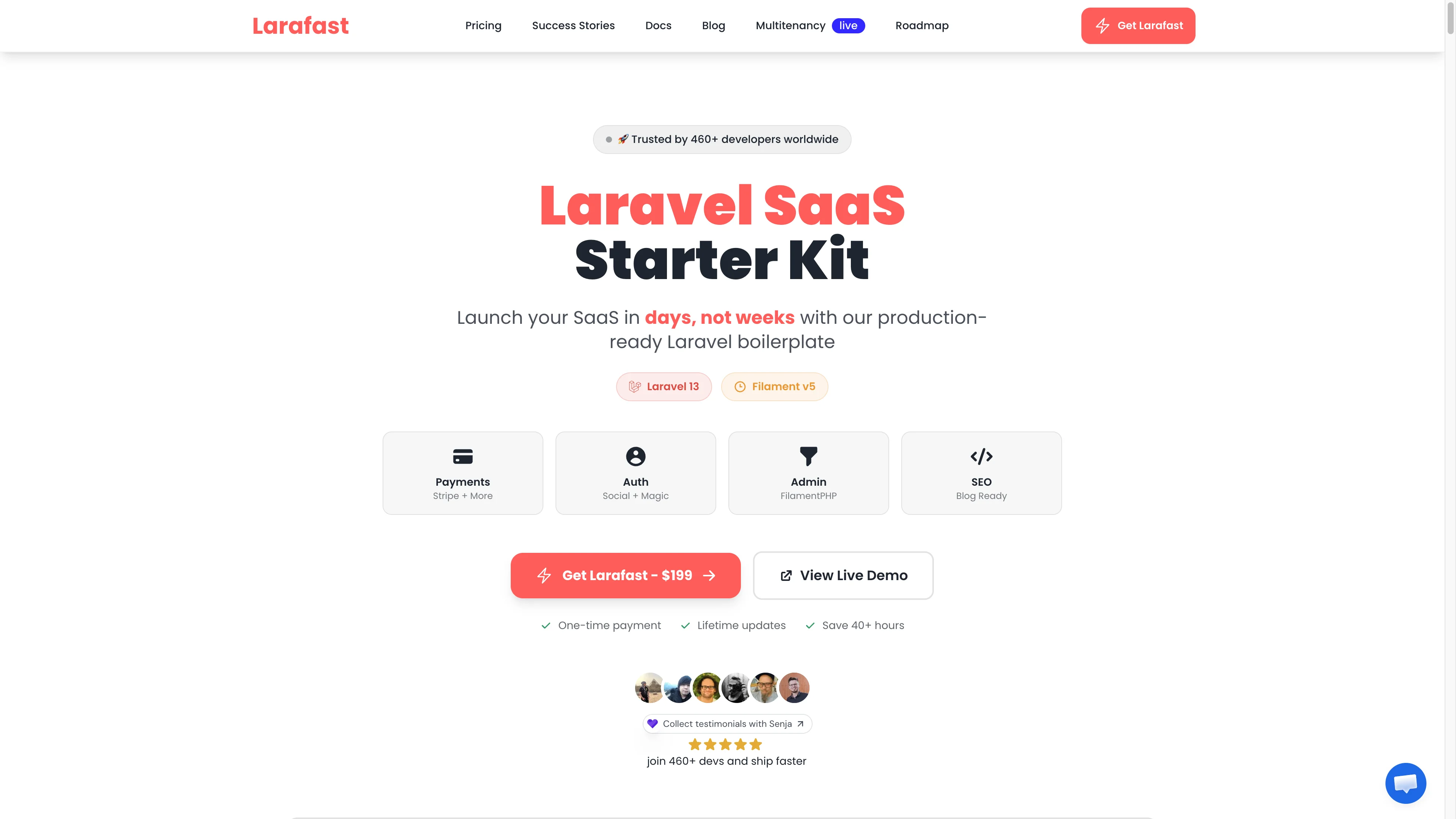
Larafast is for PHP developers who want a full application without switching to JavaScript. Sergey Karakhanyan gives you the choice between Livewire 3 and Vue 3 with Inertia, plus a preconfigured FilamentPHP administration panel. Skip it if your stack is Next.js.
Points in its favor
- Filament administration dashboard and user account panels ready to deploy
- Choice between Livewire and Vue with Inertia repositories on purchase
- Connects Stripe, Lemon Squeezy, and Paddle for payments
- Active solo founder who provides direct assistance in Discord
Where it needs work
- Multi-tenancy and team billing require buying the $299+ tier
- Upgrades require manually pulling upstream commits into your repository
- Livewire state updates take server round trips, not client rendering
Cost breakdown
The Livewire tier costs $199 once with access to both Livewire and Vue repositories. If your customers need team accounts, invitations, and team billing, you must buy the Multi-Tenancy tier at $299.
One thing to check: When your product needs customer team accounts and multi-tenant billing, make sure you pick the $299 Multi-Tenancy tier upfront. If you buy the $199 plan assuming teams are included, team subscriptions will not work until you upgrade.
4. Makerkit: enterprise-ready B2B multi-tenancy with a steep learning curve
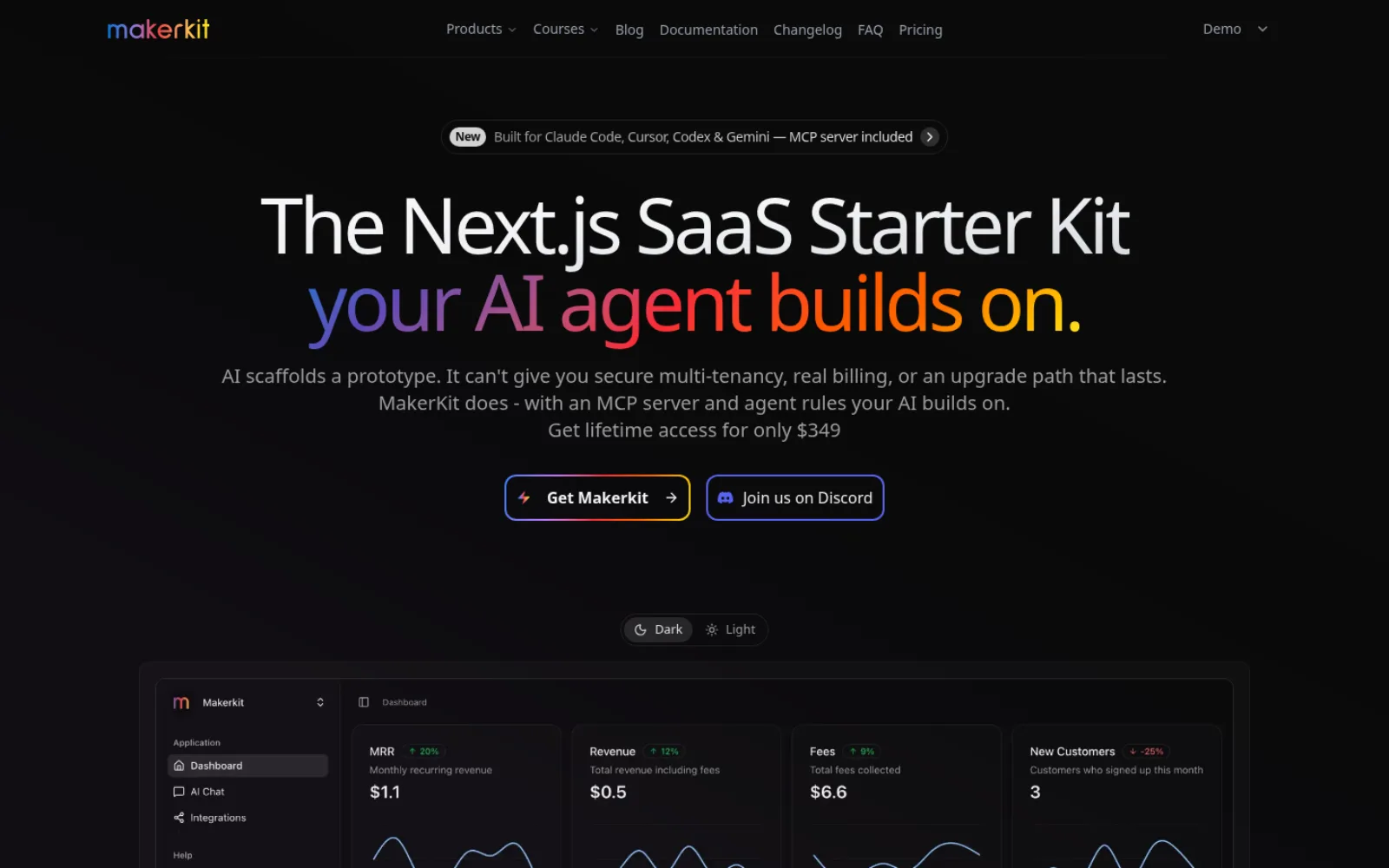
Makerkit is for TypeScript developers building complex software with organizations, custom roles, and account impersonation. Its Next.js and Supabase architecture models permissions directly in PostgreSQL Row Level Security. If you only need a simple, single-user MVP, it is far more structure than you need.
What drew us in
- Deep multi-tenancy with personal accounts, organizations, invitations, and roles
- Super-admin dashboard with user impersonation and subscription management
- Dedicated Model Context Protocol server and agent rules for Cursor
- Free open-source Lite edition lets you inspect the monorepo first
Potential downsides
- Each frontend stack requires purchasing a separate commercial license
- Steep initial learning curve before you feel comfortable modifying packages
- Strict license terms with no refunds after redeeming repository access
- Pro tier covers only one developer; extra seats cost $99 each
Paying for Makerkit
The Pro license costs $349 once for one developer seat and unlimited projects on that boilerplate. Teams is $649 for up to five collaborators. Extra developer seats cost $99 each.
Buyer risk: When you build software with multiple developers on your team, check the seat limits first. The Pro license covers only one developer seat, so adding team members to your GitHub repository will cost you an extra $99 per seat.
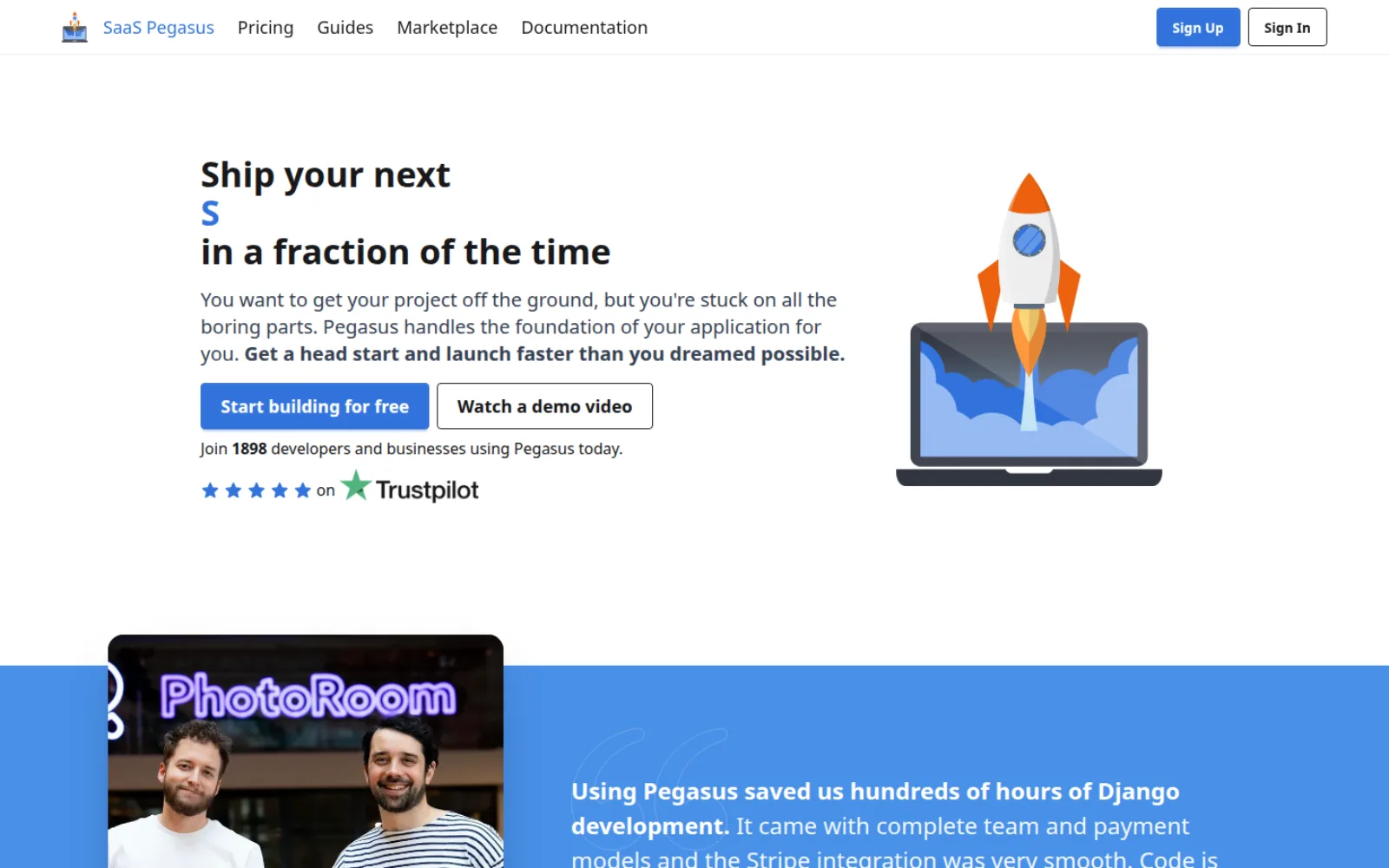
5. SaaS Pegasus: the Django standard for teams and Stripe subscriptions
SaaS Pegasus is a codebase generator from Cory Zue. You select your preferred frontend (HTMX or React) and backend options, and it generates a unique Django 6 application. It is the obvious choice for Python developers.
Features we liked
- Generates a tailored codebase
- Supports teams, invitations, and Stripe subscriptions on paid tiers
- Updates arrive through automated GitHub pull requests
- Regular release schedule with public changelogs through version 2026.9
Challenges to consider
- Python and Django only, with no JavaScript backend option
- Customer teams share one database without separate database schema isolation
- Community Slack access expires after one year on the Professional plan
Pricing structure
Professional costs $449 once for one project and one year of community Slack access. Unlimited costs $649 for unlimited projects, lifetime community access, and priority support.
Before you buy: When you buy the $449 Professional plan, access to the community Slack expires after twelve months and the license covers only one project. If you plan to launch multiple tools or want ongoing community support, you will need the $649 Unlimited tier.
6. ShipFast: fast solo launches with deliberate B2B limits
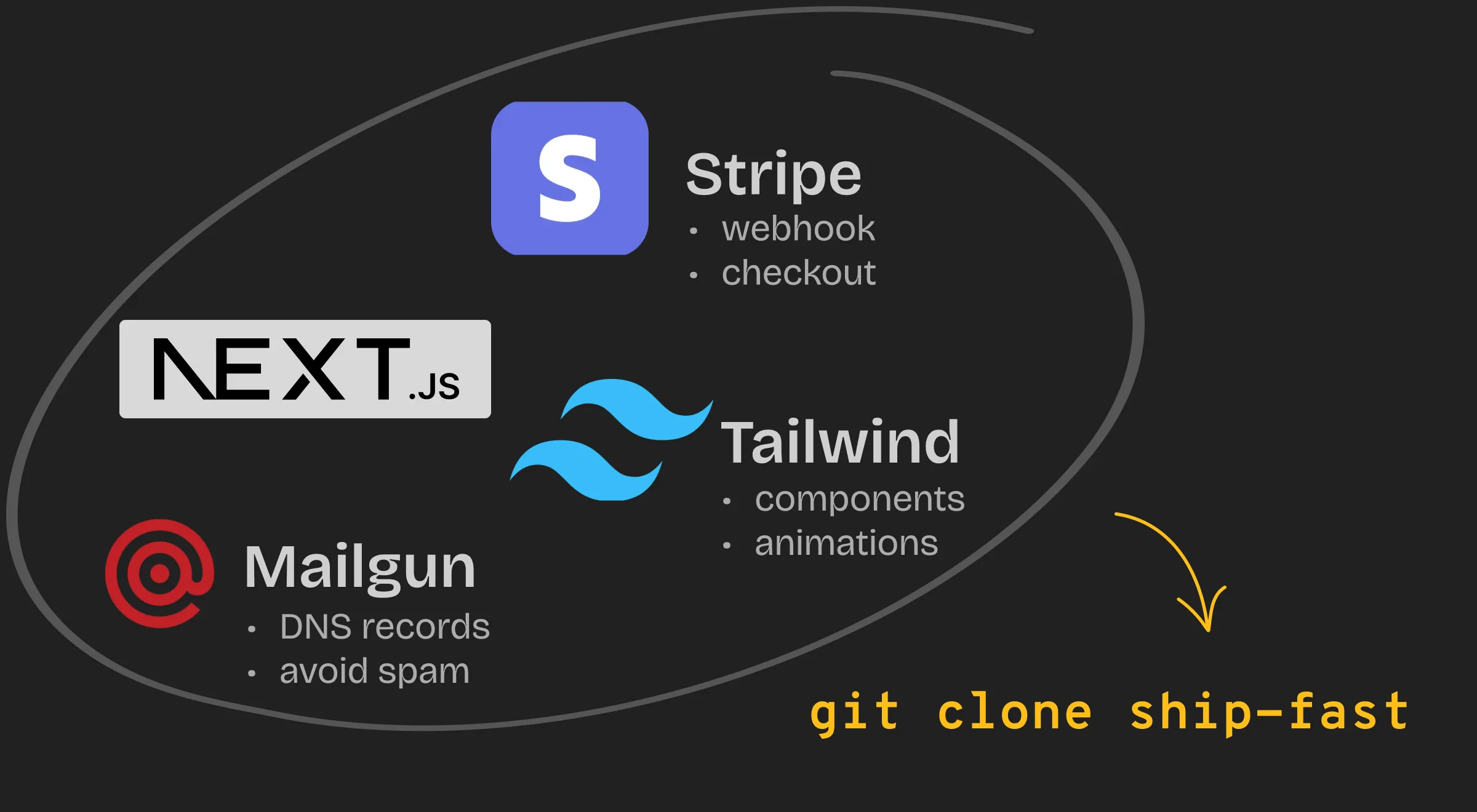
ShipFast is for indie founders who want a paid product live in a few days. You clone Marc Lou's repository, enter your environment variables, and start with NextAuth authentication, Stripe or Lemon Squeezy, and a high-converting landing page. It is built strictly for solo products.
The good stuff
- Quick local setup for single-user applications
- Includes authentication, checkout, transactional email, and marketing components
- Massive Discord community of over 5,000 makers for peer troubleshooting
- Straightforward codebase that coding assistants like Cursor navigate easily
Where it struggles
- Completely lacks team accounts, invitations, and admin dashboards
- New releases are rare; the official FAQ cites February 2026
- Closed affiliate program; Marc's attention is on his other projects
- Password sign-in requires manual configuration; magic links are the default
What you pay
Starter costs $199 once for the core Next.js boilerplate and lifetime project rights. All-in costs $249 and adds Discord access and partner perks. There are no refunds once code access is delivered.
Where things can go wrong: When your application requires multiple users to share a company workspace, ShipFast will hit a wall. Because it has no organization models or member roles, adding team accounts later turns into a major architectural rebuild.
7. Shipixen: visual launch sites and blogs without backend code
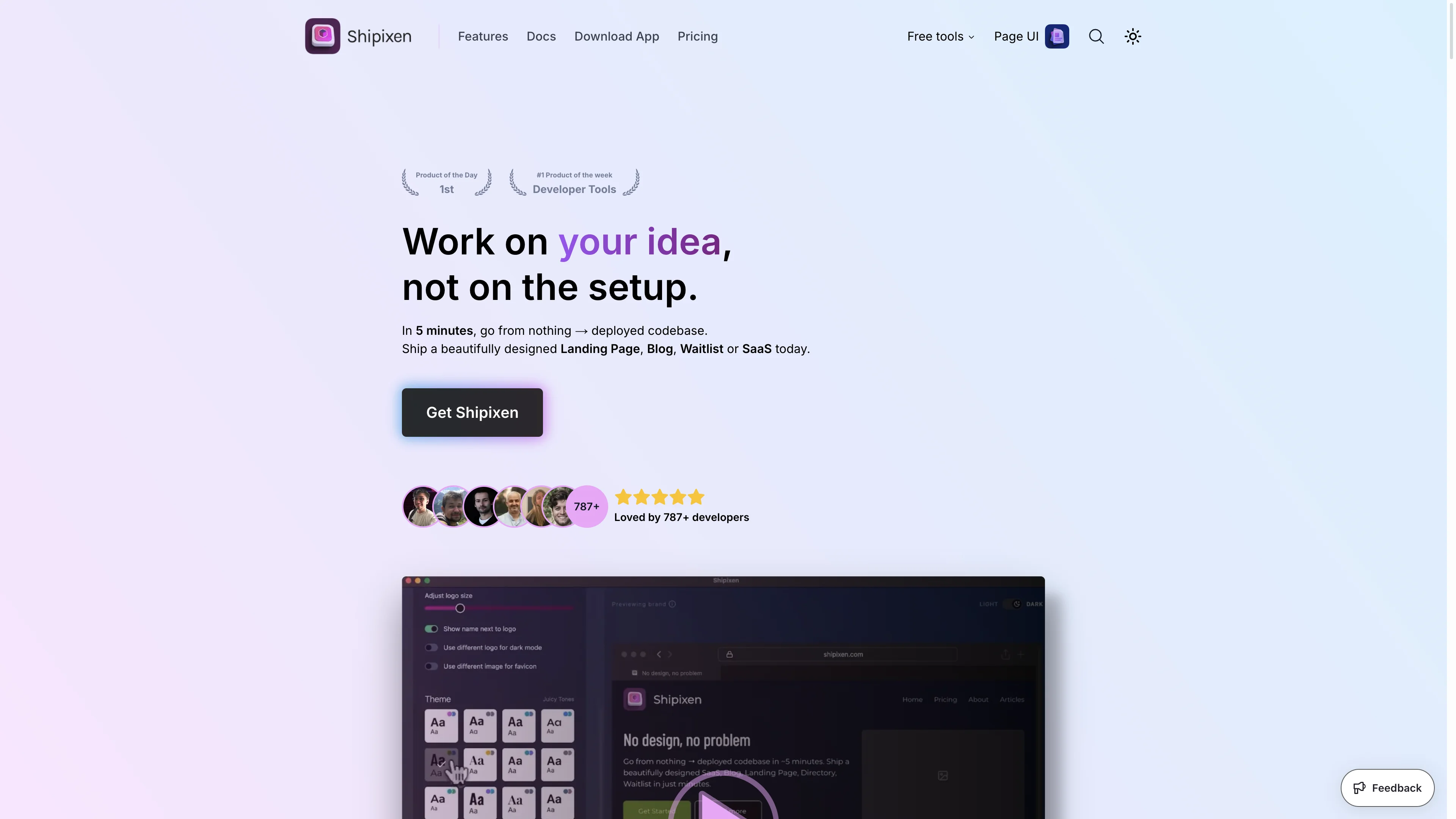
Shipixen is Dan Mindru's desktop application for macOS and Windows, and it generates customized Next.js 15 marketing websites. You tweak colors, fonts, and layout sections in a visual interface, then export clean TypeScript code with Page UI components.
The major wins
- Visual desktop generator exports complete codebases with one click
- Over 74 Page UI landing components, 63 themes, and 16 font pairings
- Markdown blog with client search, tag filters, RSS, and multiple layouts
- Includes preconfigured Cursor rules for developing additional page components
What could be better
- Contains zero user authentication, database schemas, or payment processing
- Desktop generator app is restricted to a single computer per license
- The public documentation site was last updated in July 2024
Pricing details
A One-Year License costs $249 for twelve months of generator updates, while Lifetime is $379. Both allow you to generate unlimited websites and retain perpetual code ownership.
Watch out for: When choosing Shipixen, remember that it is a website and blog generator, not a software backend. If you expect a full SaaS starter, you will still need to write all database models, user authentication, and Stripe checkouts yourself.
8. Nexty: accessible Next.js AI and content starter with manual updates
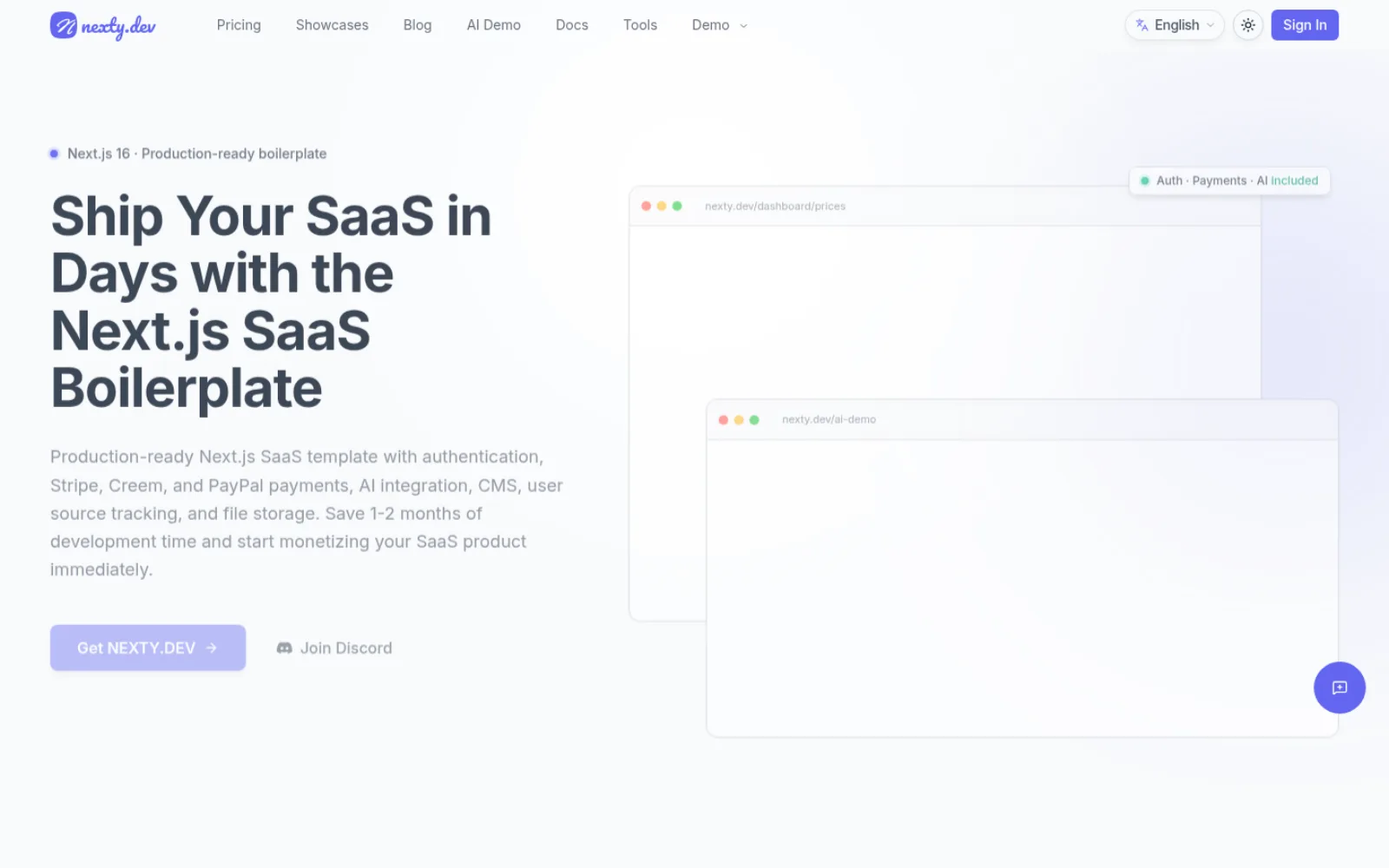
Nexty is for solo makers building tool sites, content directories, or paid artificial intelligence demos. Jude Wei's stack is Next.js 16 with Better Auth, Drizzle ORM on PostgreSQL, and multi-provider checkout including Stripe, Creem, and PayPal.
Strong points
- Multi-provider checkout supporting Stripe, Creem, and PayPal in one codebase
- Includes a CMS blog with subscription paywalls and an AI demo directory
- Public live demo available to inspect before purchasing
- Affordable entry price for solo creators testing early product concepts
What holds it back
- Supports only basic user and admin roles; no team invitations
- Lacks a public dated changelog to track repository improvements
- Pulling upstream changes means copying commits yourself
- The terms of service and refund policy contradict each other
Price points
The public homepage lists the Pro tier at $188 once (with $299 struck through) for lifetime updates and unlimited projects. An open-source edition is free on GitHub, though it leaves out authentication and payments.
Potential pitfall: Without a dated changelog, you cannot see what changed before you copy new commits in, so you end up comparing the repository yourself.
How to choose a SaaS boilerplate
A short overview:
- Individual users on Next.js: Choose ShipFast for the simplest setup, or Nexty if you want multiple payment options and a CMS.
- Team workspaces on Next.js: Choose supastarter for multi-framework flexibility and five payment providers, or Makerkit for advanced role permissions and an admin dashboard.
- Laravel applications: Choose Larafast. Keep in mind that team accounts require the $299 Multi-Tenancy tier.
- Django applications: Choose SaaS Pegasus.
- Directory and listing sites: Choose Dirstarter.
- Marketing sites and blogs only: Choose Shipixen.
To compare the two leading Next.js options directly, read our ShipFast vs supastarter breakdown.
Are SaaS boilerplates worth it?
Building authentication, payment checkout, user onboarding, and a marketing layout can take a few days time (maybe even less when using AI tools). A commercial boilerplate costs between $159 and $449 as a one-time purchase. If you value your time, it provides direct ROI.
The limitation is that a boilerplate only provides the starting line. Once authentication and billing are connected, you must still write every line of your unique business logic, database models, and user interface. If you are building a simple weekend project, free open-source templates or building directly with modern libraries may be all you need. If you need team accounts and billing edge cases handled correctly from the start, a paid boilerplate pays for itself quickly.