CoinSyncer
CoinSyncer helps users track cryptocurrency balances across exchanges and wallets from one dashboard
 coinsyncer.com

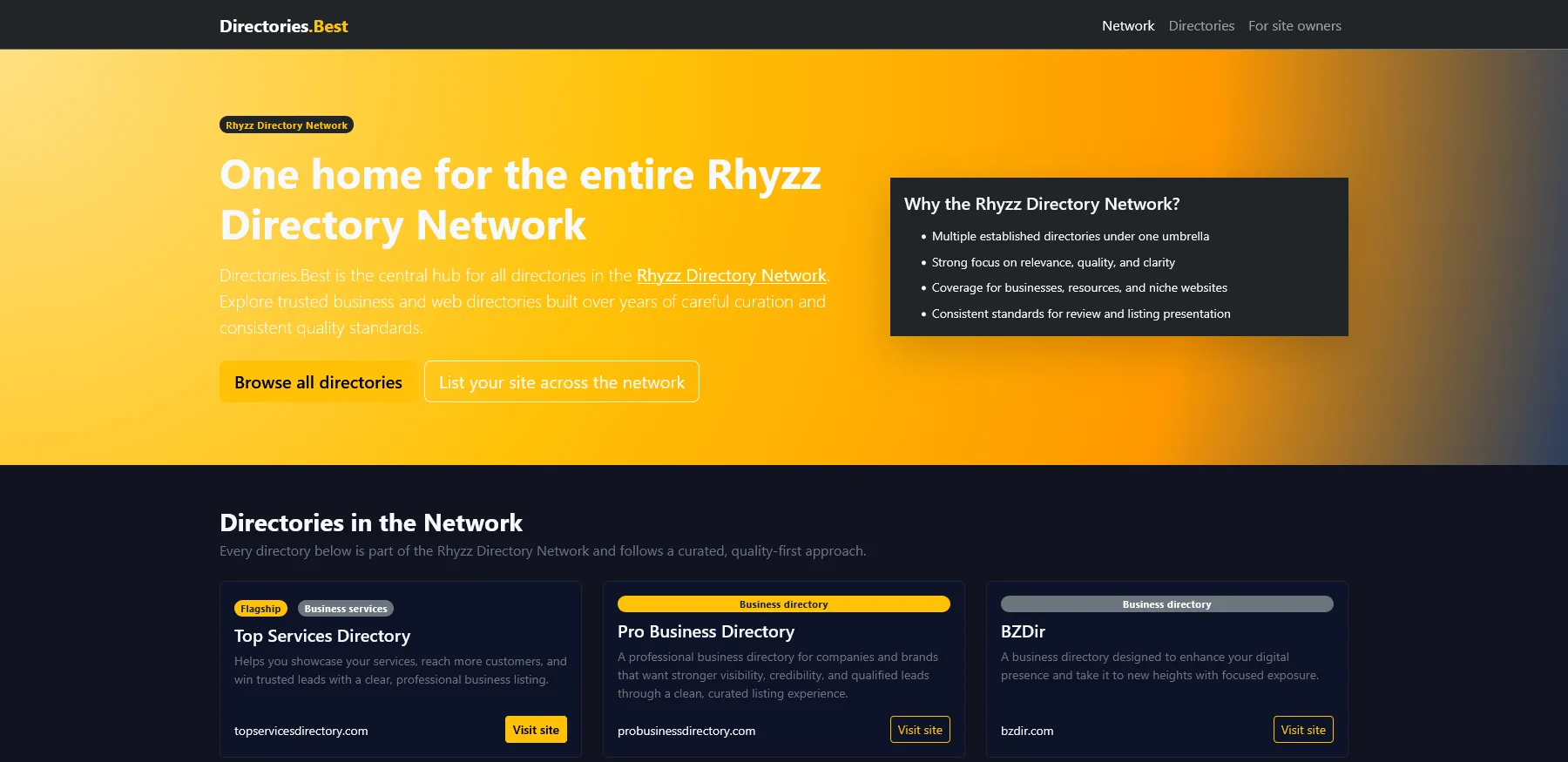
Naif Amoodi is the editor of the Rhyzz Directory Network (Directories.Best), a curated collection of web and business directories. View the full network on https://directories.best/
CoinSyncer helps users track cryptocurrency balances across exchanges and wallets from one dashboard
coinsyncer.com
PressRelease.Top is a press release distribution and publishing platform that helps businesses.
 pressrelease.top
Directory.Top is a curated business directory that helps people discover businesses and services.
 directory.top
A lot of small businesses work hard on marketing and still end up disappointed with the results.
They post regularly. They try ads. They publish content. They experiment with social platforms. On the surface, it looks like momentum. But when the dust settles, many of those efforts produce activity rather than real opportunities.
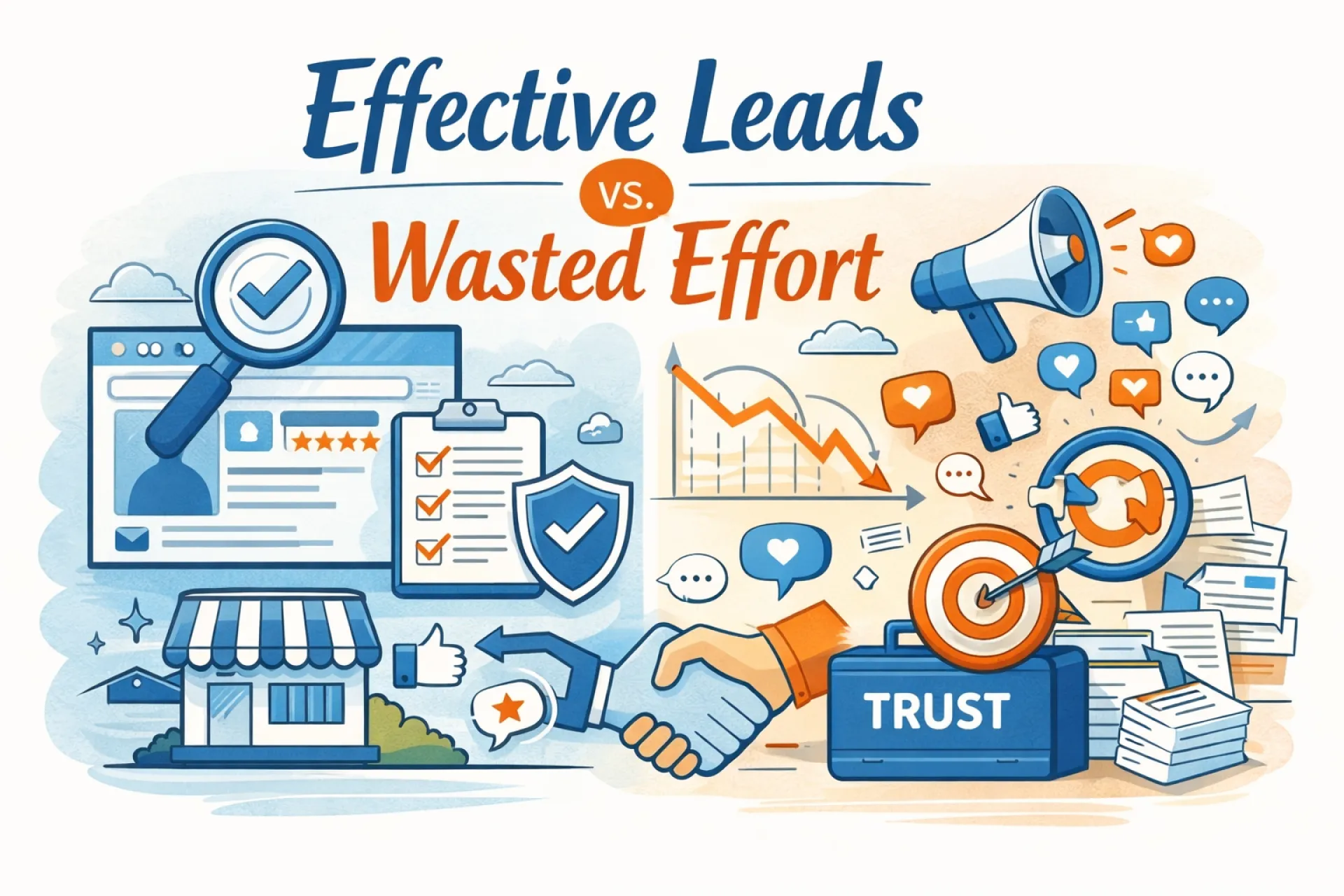
Over time, I have come to think that one of the biggest marketing mistakes is this: businesses often chase attention before they build credibility.
That sounds simple, but it changes how you evaluate almost every marketing decision.
"A lot of marketing creates motion. Much less of it creates trust."
Many people assume that more visibility automatically leads to more customers. Sometimes it does. But in a lot of cases, visibility just creates a larger number of weak interactions.
You might get:
And yet none of that guarantees serious business.
For many service providers, agencies, consultants, legal professionals, and other small businesses, the real issue is not that nobody is looking. The issue is that when people do look, the business does not immediately feel trustworthy enough.
That is where a lot of marketing breaks down.
I tend to think about marketing in two layers.
Layer one is attention. This is what gets people to notice you.
Layer two is validation. This is what helps people trust you once they notice you.
Most marketing conversations spend too much time on the first layer because it is more exciting. People like to talk about tactics, growth, traffic, and reach. But in practice, validation is often what determines whether attention becomes revenue.
When someone is considering a business, they usually do not perform a deep investigation. They do something much faster.
They run a quick trust check.
That trust check often looks like this:
This process may only take a minute or two.
If the digital footprint looks weak, outdated, confusing, or thin, the lead often disappears before the business even knows there was interest.
In my experience, good leads usually come from a combination of the following:
That last point matters more than many people realize. Marketing is not just about being seen. It is about reducing hesitation.
A visitor may be interested in your service, but still ask:
If your online presence does not answer those questions quickly, even decent traffic can underperform.
I do not think most weak marketing is completely useless. The real problem is that it often creates the illusion of progress.
Some common examples:
These things can make a business look busy without making it easier for the right customer to say yes.
That is why I think low-quality visibility can be surprisingly expensive, even when it looks cheap or free.
Not all traffic has the same value.
There is a huge difference between someone casually scrolling and someone actively evaluating providers. One is passive attention. The other is potential demand.
A view is not intent.
A click is not trust.
A visit is not readiness.
This is why smaller channels sometimes outperform larger ones. They may bring fewer visitors, but the visitors arrive with more context and more purpose.
That can make all the difference.
I still think content marketing can work well. But it has to support the business instead of drifting away from it.
For many small businesses, content should help with one or more of these goals:
What usually works less well is content created only to chase broad traffic without any connection to what the business actually sells.
That kind of traffic may look good in analytics, but it does not always help the business move forward.
I think some of the most valuable marketing work is also the least exciting.
Things like:
None of that feels flashy. But it compounds over time.
Better positioning compounds.
Better consistency compounds.
Better validation compounds.
And in many cases, that is what improves lead quality more than another burst of content or another short campaign.
If a small business owner asked me where to start, I would not begin with a trendy tactic or a complicated funnel.
I would start with a simpler exercise:
If the answer is no, that is probably the first marketing problem to solve.
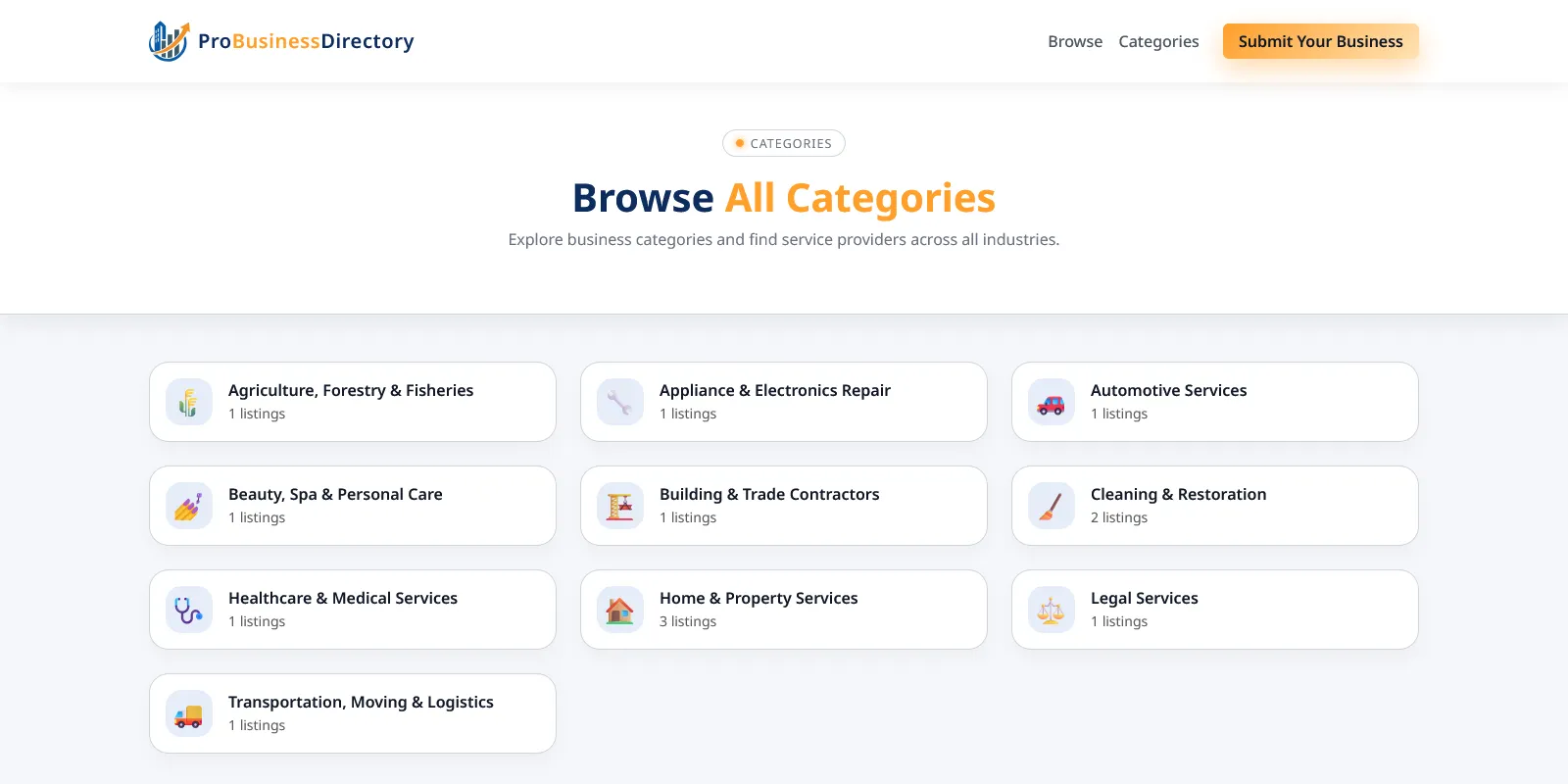
In my experience, the businesses that grow steadily are not always the ones making the most noise. They are the ones that look credible everywhere a serious buyer checks. That is why I think the best marketing often comes from strengthening the trust layer behind visibility, not just increasing visibility itself. Quiet credibility still matters, and that is part of the reason platforms built around professional business presence, such as Pro Business Directory, can still make sense in the broader marketing picture when used as one piece of a trustworthy online footprint.
A lot of websites today are built around speed. Publish fast, react fast, move on fast. The internet rewards momentum, and that has shaped the kind of content people create. Much of what gets posted now is designed for quick consumption: short updates, fast opinions, clipped summaries, and content that works best when seen for a few seconds at a time.
That model is useful for many things, but it is not the only model worth building around.
There is still a strong case for platforms centered on articles. Not because the web needs more words for the sake of having more words, but because some ideas deserve a format that lets them develop properly. A short post can announce something. A good article can explain it, test it, question it, and leave the reader with something more solid than a first impression.
That difference matters more than it may seem.
When a platform is designed for articles, it encourages a different standard of publishing. Writers are less tempted to rely on a clever opening and more likely to think about structure, flow, and usefulness. Readers arrive with different expectations too. They are not just scanning for a punchline or a signal. They are there to follow an idea from beginning to end.
That creates a better environment for certain kinds of content. Practical guides work better when they can be laid out clearly. Industry commentary works better when it has room for reasoning. Comparisons are more helpful when they explain trade-offs instead of reducing everything to a quick verdict. Even opinion pieces improve when they have enough space to support their claims.
There is also a business case for this kind of publishing. Companies, founders, publishers, and independent creators all benefit from having a place where they can say more than what fits into a social post. A proper article can present expertise, explain a service, introduce a niche, or build credibility in a way that fast content usually cannot. It does not need to go viral to be valuable. It only needs to be useful to the right readers.
Another advantage is that article platforms tend to age better. Fast content is tied to timing. Once the moment passes, the content often loses most of its value. Articles can do something different. They can continue to attract readers because they answer questions, provide perspective, or cover a topic in a way that remains relevant beyond the day they were posted. That gives article-based sites a durability that many feed-based platforms struggle to match.
This is one reason a focused publishing site can still stand out. It does not need to compete by doing exactly what every social platform already does. It can compete by offering something that feels more intentional: content with shape, substance, and enough room to become worth saving or sharing later.
That kind of publishing also helps restore a sense of editorial identity. On article-driven sites, the platform itself can begin to mean something. Readers start to associate it with a certain tone, level of quality, or type of subject matter. That is much harder to achieve in environments where content is constantly being flattened into the same basic format.
The web is not suffering from a lack of content. It is suffering from an excess of forgettable content. That is exactly why article platforms still make sense. They create space for writing that is meant to last longer than a scroll, serve a clearer purpose, and respect the reader enough to offer more than surface-level attention traps.
There is still room for websites built around that idea, and that is part of what makes Scoop Articles interesting. A platform focused on readable, topic-based publishing is not a throwback. It is a practical response to a web that often moves too quickly to say very much at all.
Scoop Articles: https://www.scooparticles.com/

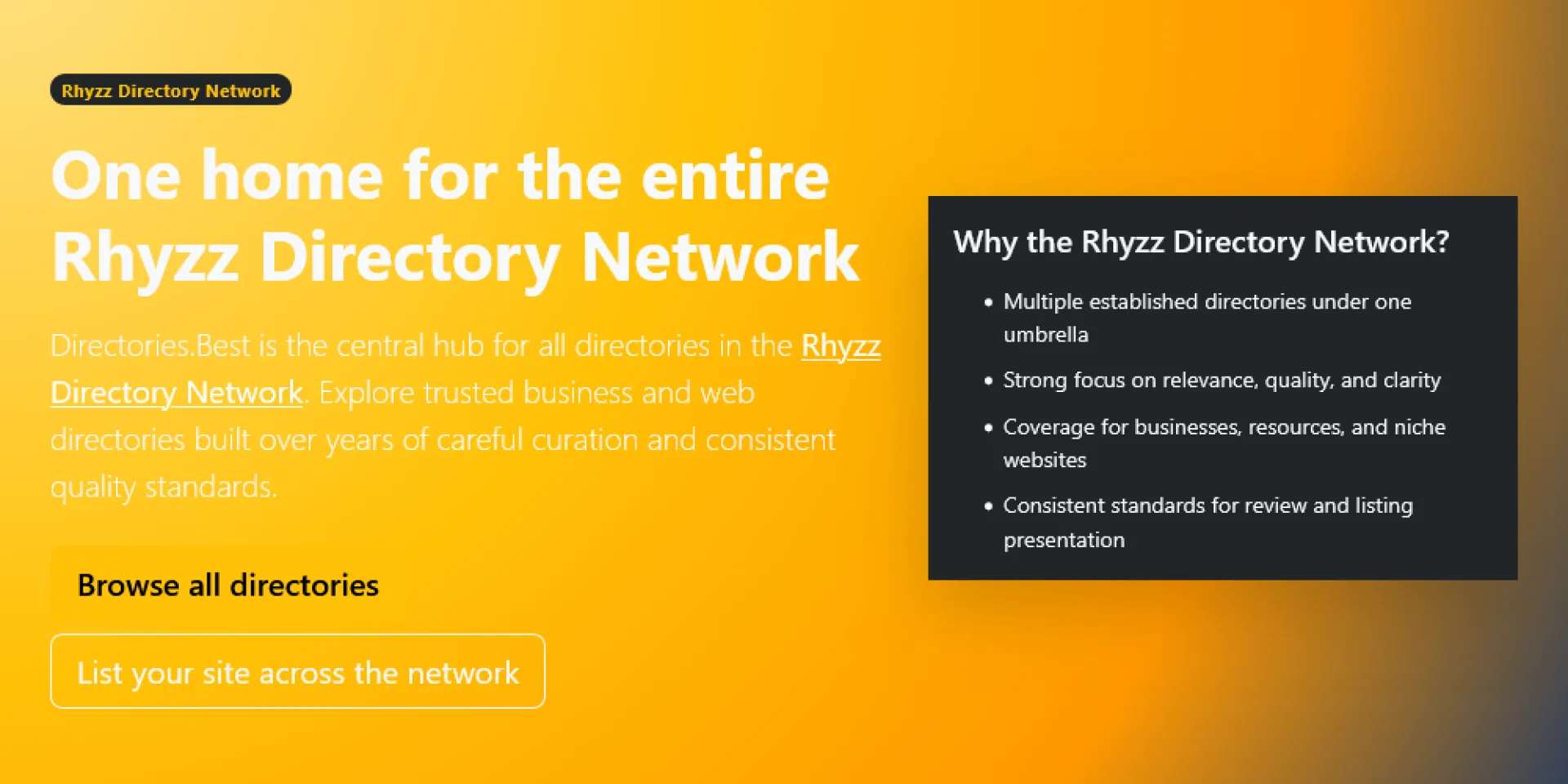
I created Directories.Best to make it easier to find useful directories without wasting time jumping from site to site.
There are a lot of directories online, but not all of them are worth your attention. Some are outdated, some are too broad, and some just are not very helpful. I wanted a place that brings together directories that are actually useful to browse, submit to, or keep an eye on.
Directories.Best is part of the broader Rhyzz Directory Network, and the idea behind it is simple: organize quality directory websites in one place so people can discover them more easily. That includes business directories, niche directories, and other web directories that may be worth exploring.
I built it for people who still see value in directories when they are well organized and genuinely useful. Whether you are a business owner, a marketer, or just someone researching directory sites, the goal is to make discovery easier.
Directories.Best: https://directories.best/
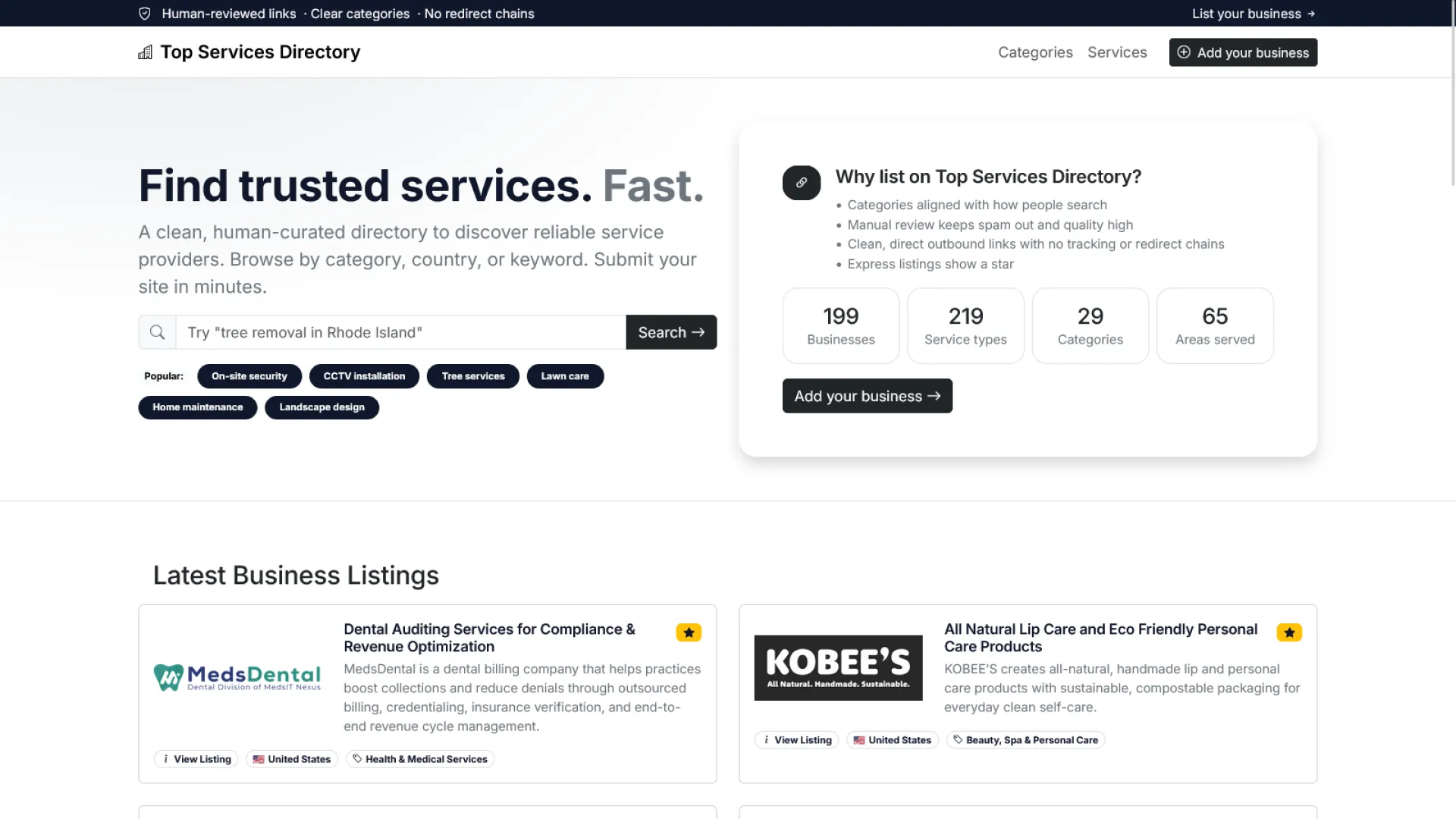
I created Top Services Directory to give service-based businesses a place where they can be found more easily by people who are actively looking for what they offer.
There are many directories online, but not all of them are focused in a useful way. Some mix too many unrelated listings together, while others do not make it easy for users to discover the kinds of services they actually need. I wanted to build a directory that puts service businesses at the center and makes browsing more straightforward.
Top Services Directory is part of the broader Rhyzz Directory Network, and the idea behind it is simple: create a dedicated space for service providers across different industries so they can be listed in a more organized and accessible way. From local professionals to specialized service companies, the goal is to make it easier for visitors to find relevant businesses without unnecessary clutter.
I built it for business owners who want more visibility and for users who want a cleaner way to explore service-related listings online. Whether someone is searching for a specific provider or simply browsing available services, Top Services Directory is meant to make that process easier.
Top Services Directory: https://www.topservicesdirectory.com/
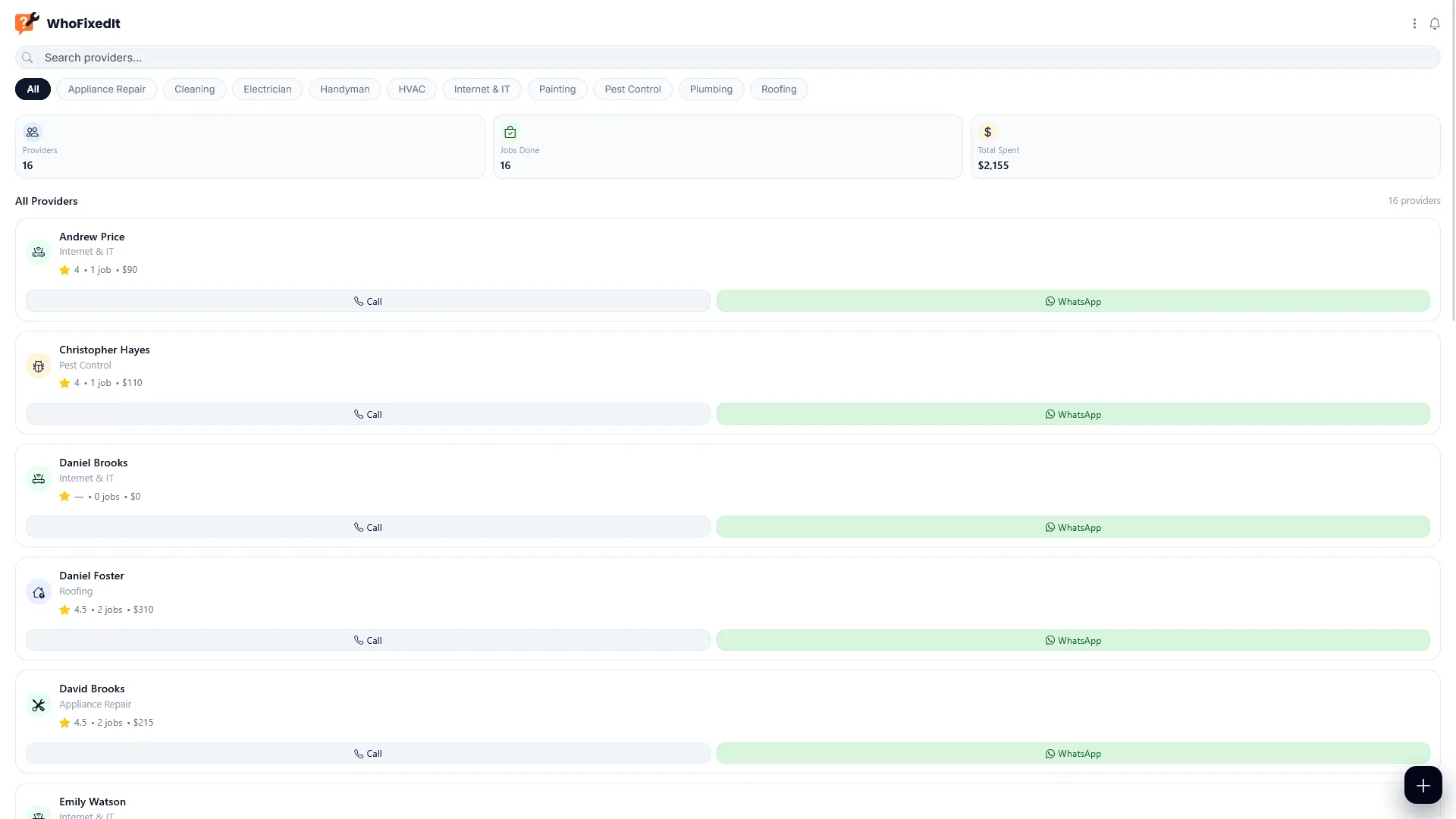
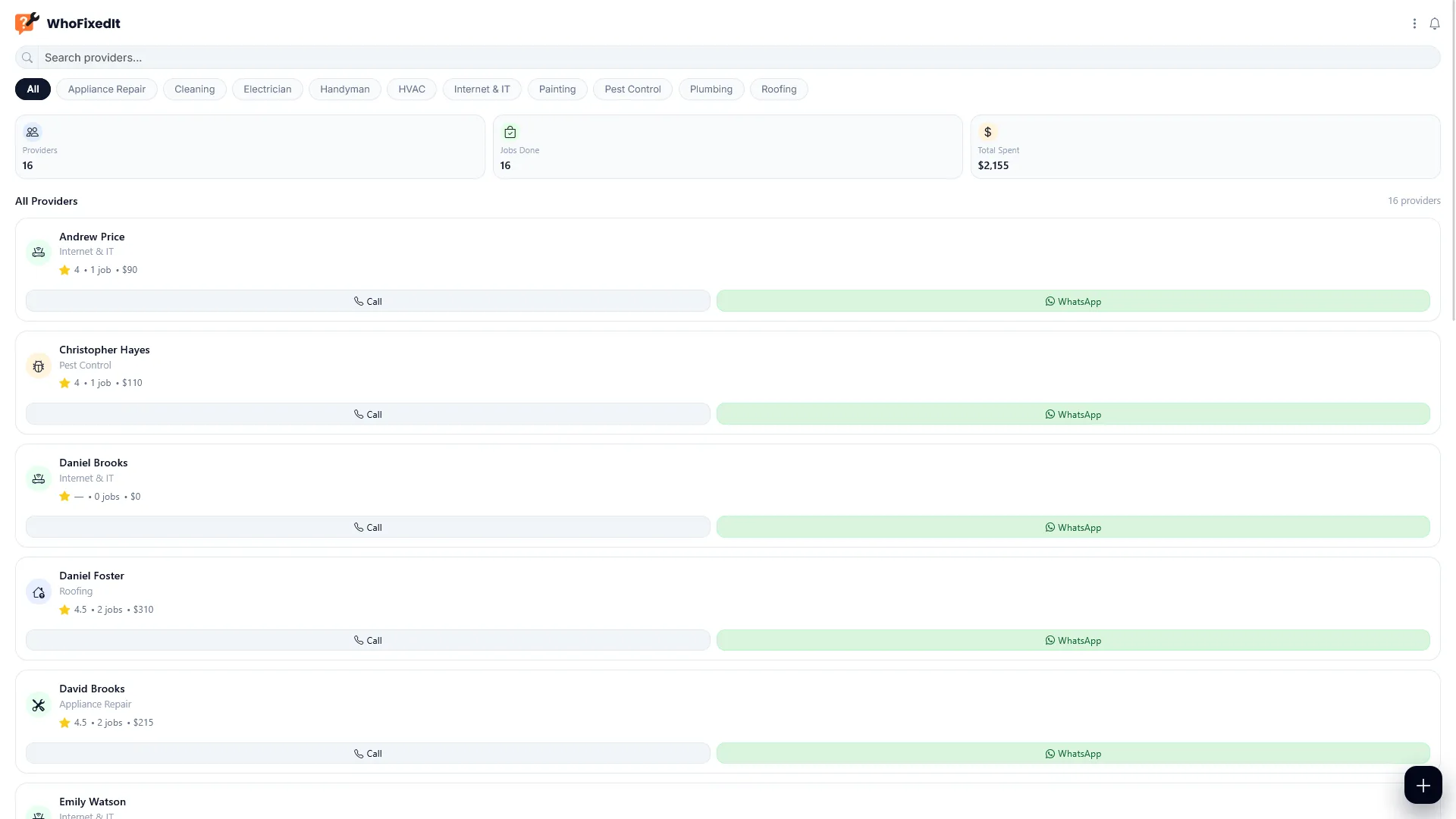
I kept losing track of which plumber, electrician, or technician worked on what at my home, so I built WhoFixedIt.
It’s a simple logbook where you can save service provider details, what they fixed, when the work was done, costs, photos, and notes. The next time something breaks, you instantly know who to call and what was done last time.
WhoFixedIt is available as an Android app on the Google Play Store and can also be used directly in a web browser.
I would love to hear your feedback or suggestions!