
A lot of small businesses work hard on marketing and still end up disappointed with the results.
They post regularly. They try ads. They publish content. They experiment with social platforms. On the surface, it looks like momentum. But when the dust settles, many of those efforts produce activity rather than real opportunities.
Over time, I have come to think that one of the biggest marketing mistakes is this: businesses often chase attention before they build credibility.
That sounds simple, but it changes how you evaluate almost every marketing decision.
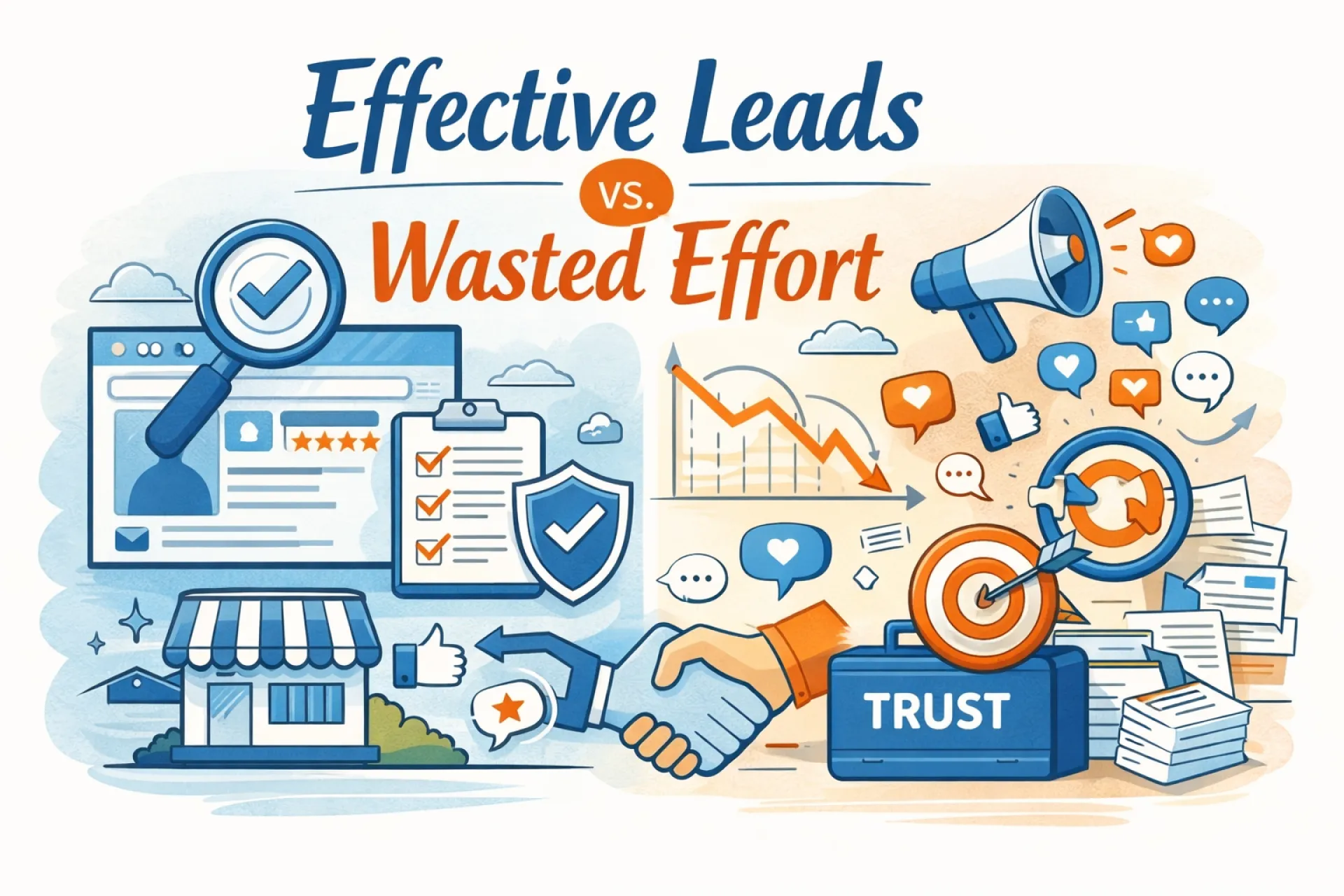
"A lot of marketing creates motion. Much less of it creates trust."
Why Visibility Alone Often Fails
Many people assume that more visibility automatically leads to more customers. Sometimes it does. But in a lot of cases, visibility just creates a larger number of weak interactions.
You might get:
- more impressions
- more clicks
- more profile visits
- more casual messages
- more low-quality inquiries
And yet none of that guarantees serious business.
For many service providers, agencies, consultants, legal professionals, and other small businesses, the real issue is not that nobody is looking. The issue is that when people do look, the business does not immediately feel trustworthy enough.
That is where a lot of marketing breaks down.
The Two Layers of Marketing
I tend to think about marketing in two layers.
Layer one is attention. This is what gets people to notice you.
- social media
- SEO
- ads
- email campaigns
- partnerships
- content marketing
- outreach
Layer two is validation. This is what helps people trust you once they notice you.
- a clear website
- consistent business information
- strong positioning
- reviews and trust signals
- professional profiles
- relevant mentions across the web
- evidence that the business is real, active, and credible
Most marketing conversations spend too much time on the first layer because it is more exciting. People like to talk about tactics, growth, traffic, and reach. But in practice, validation is often what determines whether attention becomes revenue.
What Prospects Actually Do
When someone is considering a business, they usually do not perform a deep investigation. They do something much faster.
They run a quick trust check.
That trust check often looks like this:
- They search the business name.
- They scan the website.
- They look for a clear explanation of the offer.
- They check whether the business appears legitimate and current.
- They compare it with other options.
- They decide whether it feels worth contacting.
This process may only take a minute or two.
If the digital footprint looks weak, outdated, confusing, or thin, the lead often disappears before the business even knows there was interest.
Where Good Leads Usually Come From
In my experience, good leads usually come from a combination of the following:
- a clear offer
- credible positioning
- visibility in places where buyers already look
- consistency across the web
- signals that reduce doubt
That last point matters more than many people realize. Marketing is not just about being seen. It is about reducing hesitation.
A visitor may be interested in your service, but still ask:
- Is this business real?
- Do they specialize in what I need?
- Why should I trust them over someone else?
- Do they look established enough to contact?
If your online presence does not answer those questions quickly, even decent traffic can underperform.
What Often Wastes Time
I do not think most weak marketing is completely useless. The real problem is that it often creates the illusion of progress.
Some common examples:
- publishing content only to fill a schedule
- chasing broad traffic that does not match buying intent
- posting constantly on social media while the website remains vague
- running campaigns before the brand looks trustworthy
- focusing on reach while ignoring conversion friction
These things can make a business look busy without making it easier for the right customer to say yes.
That is why I think low-quality visibility can be surprisingly expensive, even when it looks cheap or free.
Why Buyer Intent Matters More Than Raw Traffic
Not all traffic has the same value.
There is a huge difference between someone casually scrolling and someone actively evaluating providers. One is passive attention. The other is potential demand.
A view is not intent.
A click is not trust.
A visit is not readiness.
This is why smaller channels sometimes outperform larger ones. They may bring fewer visitors, but the visitors arrive with more context and more purpose.
That can make all the difference.
What Content Should Actually Do
I still think content marketing can work well. But it has to support the business instead of drifting away from it.
For many small businesses, content should help with one or more of these goals:
- clarify expertise
- answer buyer questions
- show category relevance
- support search visibility for meaningful topics
- build confidence before contact
What usually works less well is content created only to chase broad traffic without any connection to what the business actually sells.
That kind of traffic may look good in analytics, but it does not always help the business move forward.
The Less Glamorous Work That Compounds
I think some of the most valuable marketing work is also the least exciting.
Things like:
- improving business descriptions
- tightening positioning
- making profile information consistent
- strengthening category alignment
- improving trust signals
- cleaning up how the brand appears in search
None of that feels flashy. But it compounds over time.
Better positioning compounds.
Better consistency compounds.
Better validation compounds.
And in many cases, that is what improves lead quality more than another burst of content or another short campaign.
A Better Starting Point for Small Businesses
If a small business owner asked me where to start, I would not begin with a trendy tactic or a complicated funnel.
I would start with a simpler exercise:
- Search your business the way a customer would.
- Look at what appears on page one.
- Review your website with fresh eyes.
- Check whether your positioning is instantly clear.
- Notice whether your profiles and signals build confidence.
- Ask whether a serious buyer would trust what they see in under two minutes.
If the answer is no, that is probably the first marketing problem to solve.
Final Thought
In my experience, the businesses that grow steadily are not always the ones making the most noise. They are the ones that look credible everywhere a serious buyer checks. That is why I think the best marketing often comes from strengthening the trust layer behind visibility, not just increasing visibility itself. Quiet credibility still matters, and that is part of the reason platforms built around professional business presence, such as Pro Business Directory, can still make sense in the broader marketing picture when used as one piece of a trustworthy online footprint.
No comments yet. Be the first to comment!