
Firecrawl review
An open-source scraping and crawling API that turns websites into Markdown and structured data for AI agents.
An open-source scraping and crawling API that turns websites into Markdown and structured data for AI agents.
Reviewed by

Vincent Edes · Founder & reviewer
Last reviewed Sep 11, 2026
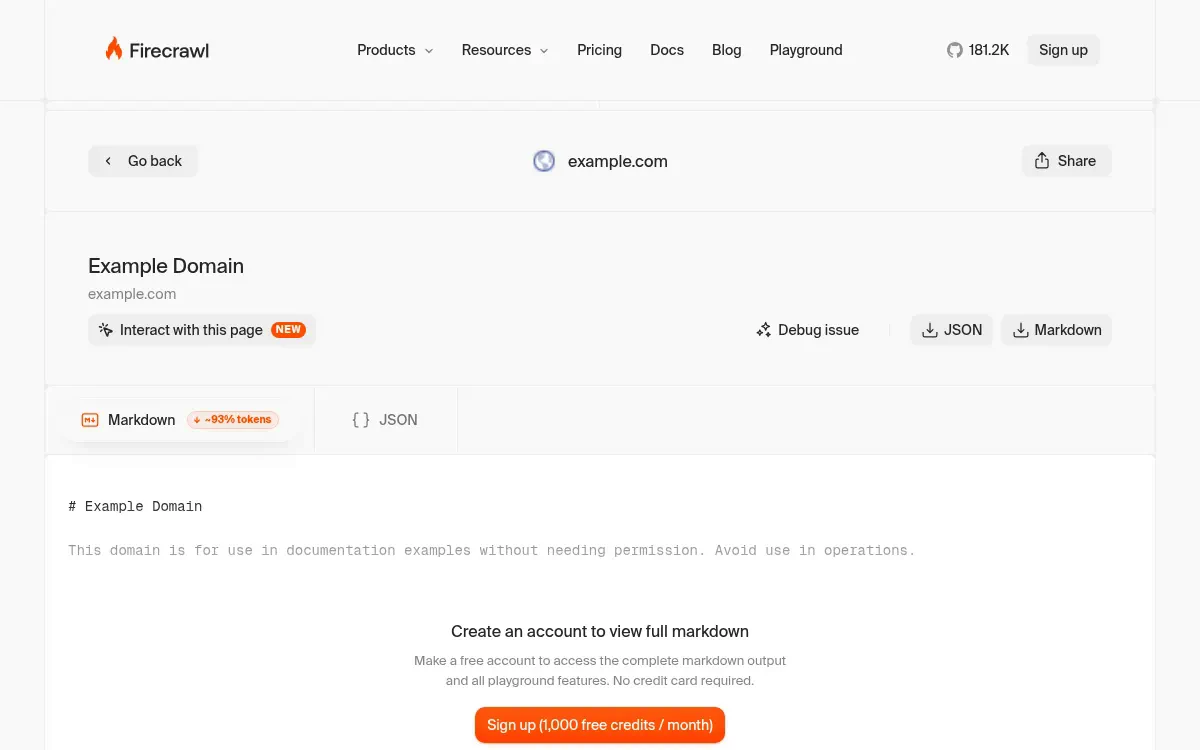
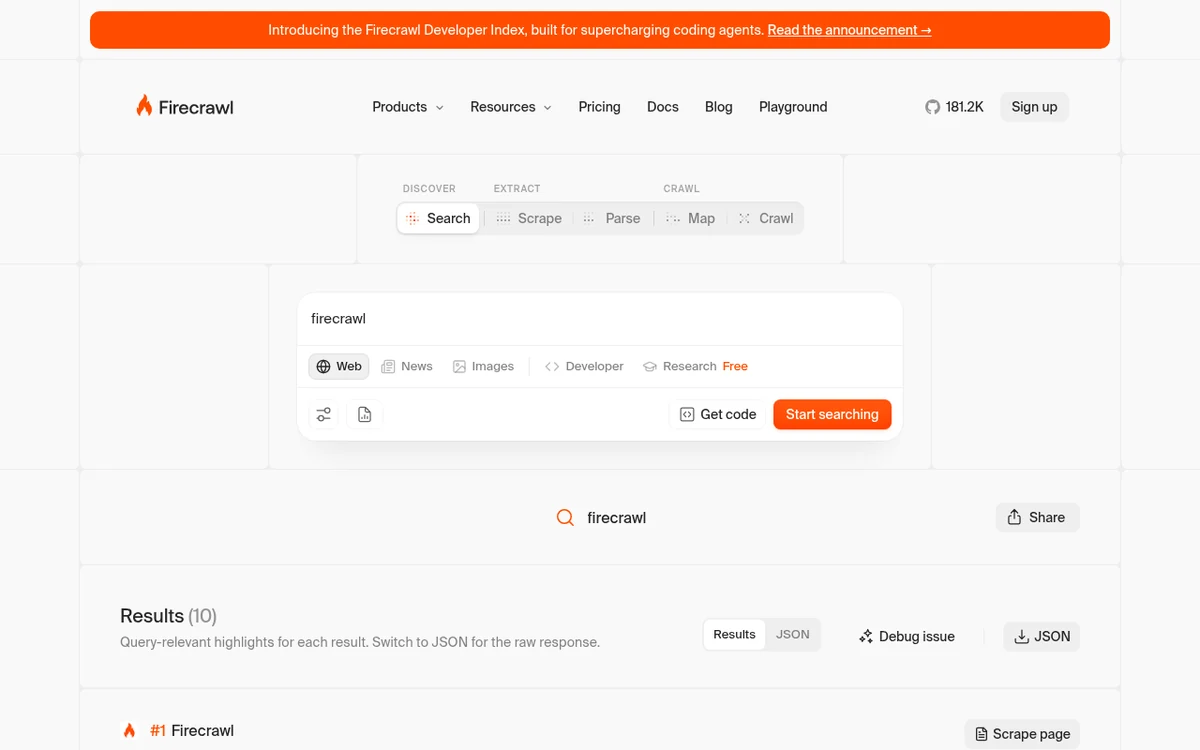
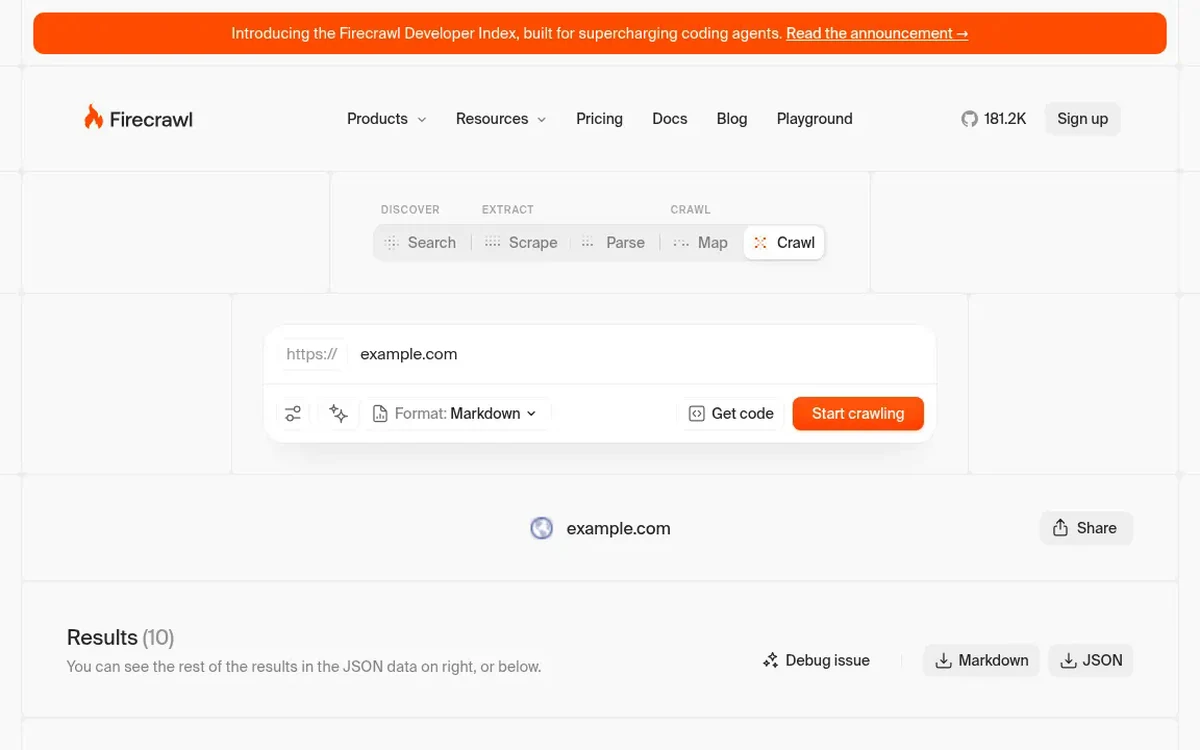
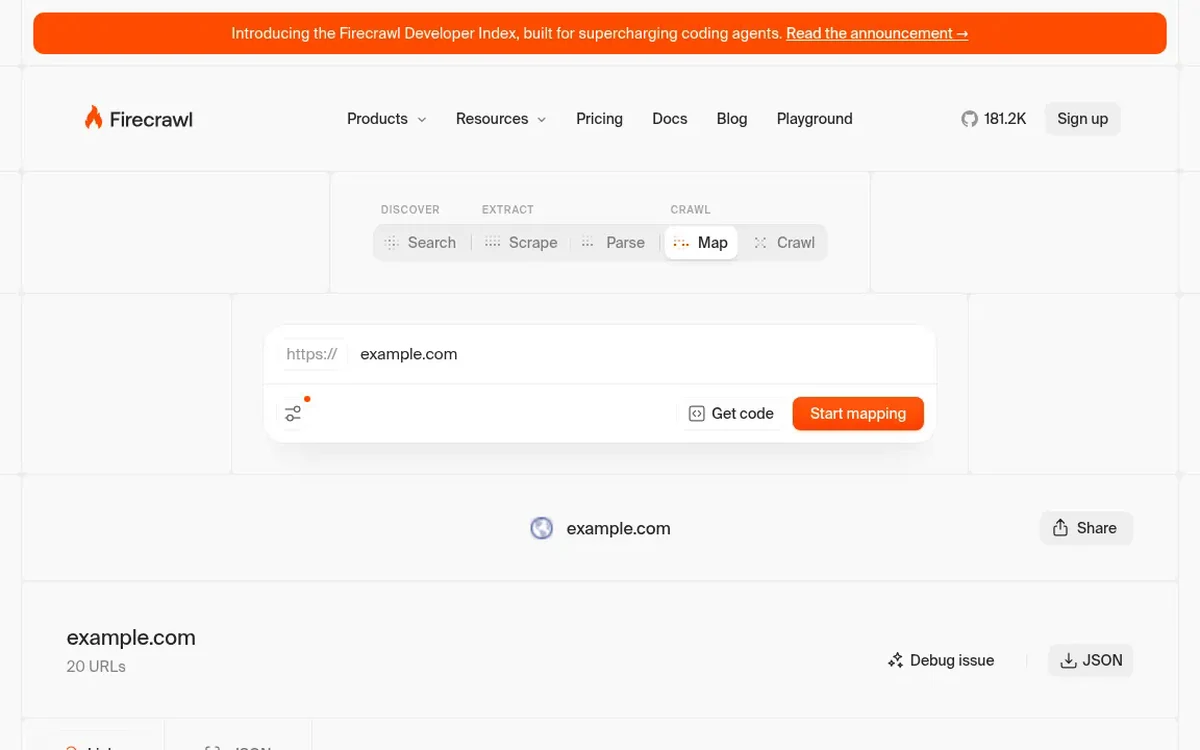
Scraping example.com in the Firecrawl Playground turns the page into clean Markdown.
Firecrawl is an open-source web crawler and scraping API built specifically for developers working with language models. Caleb Peffer, Eric Ciarla, and Nicolas Silberstein Camara launched the project through Y Combinator in 2022 after building Mendable. The core technology is open-sourced on GitHub with over 150,000 stars, while the hosted cloud service at firecrawl.dev provides managed infrastructure with dedicated anti-bot defenses.
The API turns target URLs into clean, token-efficient Markdown for language model prompts. You can scrape individual pages, crawl entire websites through internal links, generate URL site maps, or run live web searches that return scraped content in a single request. If a webpage requires user interaction before loading, the interact feature allows your code to click buttons, fill out forms, and wait for elements to render.
The free plan provides 1,000 credits that replenish every month with no credit card required. Paid tiers on their pricing page start with Hobby at $19 per month for 5,000 credits, or $16 per month when billed annually at $190 per year, saving you 16 percent across the year. If you upgrade to a paid tier or purchase credit packs, you can get 10% off first purchase through our Firecrawl promo code deal by signing up through our referral link. While you can self-host the repository via Docker Compose, keep in mind that screenshots, browser actions, and their proprietary Fire-engine anti-bot system are omitted from the default open-source release.
Firecrawl is the natural starting point for retrieval-augmented generation and autonomous web agents. If your product also needs corporate brand assets and company logos, check out Context.dev. If you want prebuilt scrapers for major web marketplaces, see Apify. Compare all providers in our web scraping API catalog.
What's included with Firecrawl
- Scrape webpages into clean Markdown, HTML, screenshots, or JSON
- Full website crawling with automated link discovery and site mapping
- Combined live web search and content extraction endpoint
- Programmatic browser actions for clicking, form filling, and waiting
- Official Model Context Protocol server for Cursor and Claude
Our review
Firecrawl pros and cons
Pros
- Free tier renews with 1,000 credits every month
- Combines live web search, crawling, and page interaction
- Clean Markdown output optimized for language model prompts
- Direct Model Context Protocol integration for AI coding tools
- Firecrawl-side failures are not billed; target errors may consume credits
Cons
- Structured JSON extraction costs five credits per page
- Self-hosted Docker setup excludes proprietary anti-bot features
- Hobby allowance of 5,000 credits depletes quickly
- Unused credits do not carry over on entry plans
- Does not offer native company brand data endpoints
Best for
Engineers building AI agents and RAG pipelines that need clean Markdown.
Skip if
You need rich brand metadata and company design systems from a domain, or you assumed the self-hosted Docker container includes their proprietary Fire-engine proxy bypass technology.
Score breakdown
- Features: 4.7 out of 5
- The feature set is built specifically for AI workflows, offering page scraping, recursive site crawling, live web search, browser interactions, and dedicated agent skills. The only notable omission compared to Context.dev is that it does not provide native company brand intelligence or corporate design data.
- Reliability: 4.5 out of 5
- Firecrawl's billing docs explain that credits depend on endpoint/options and may be charged even for target 403/404 when the infrastructure processes the request. Firecrawl-side failures typically cost 0 credits, so check `metadata.statusCode` to avoid retry loops. Because the self-hosted Docker distribution omits their hosted Fire-engine anti-bot stack, reliability varies by deployment choice.
- Value: 4.3 out of 5
- The renewing 1,000 credit free tier provides genuine monthly testing value, and the Standard tier at $99 for 100,000 credits is competitively priced for production systems. On the smaller Hobby plan, however, structured JSON extraction and browser interactions consume multiple credits per page, which can deplete your allowance quickly.
- Docs & SDKs: 4.6 out of 5
- The documentation is exceptionally developer-friendly and structured for AI agents, providing ready-to-use MCP snippets, onboarding guides, and an explicit credit rate card. The self-hosting guide is also upfront about the limitations of the open-source release.
- Ease of use: 4.5 out of 5
- Initial setup requires only an API key and a standard POST request, while native SDKs and an MCP server allow quick integration with Cursor and Claude Code. Developers still need to monitor their credit consumption carefully when utilizing multi-credit features like JSON extraction.
The feature set is built specifically for AI workflows, offering page scraping, recursive site crawling, live web search, browser interactions, and dedicated agent skills. The only notable omission compared to Context.dev is that it does not provide native company brand intelligence or corporate design data.
Firecrawl's billing docs explain that credits depend on endpoint/options and may be charged even for target 403/404 when the infrastructure processes the request. Firecrawl-side failures typically cost 0 credits, so check `metadata.statusCode` to avoid retry loops. Because the self-hosted Docker distribution omits their hosted Fire-engine anti-bot stack, reliability varies by deployment choice.
The renewing 1,000 credit free tier provides genuine monthly testing value, and the Standard tier at $99 for 100,000 credits is competitively priced for production systems. On the smaller Hobby plan, however, structured JSON extraction and browser interactions consume multiple credits per page, which can deplete your allowance quickly.
The documentation is exceptionally developer-friendly and structured for AI agents, providing ready-to-use MCP snippets, onboarding guides, and an explicit credit rate card. The self-hosting guide is also upfront about the limitations of the open-source release.
Initial setup requires only an API key and a standard POST request, while native SDKs and an MCP server allow quick integration with Cursor and Claude Code. Developers still need to monitor their credit consumption carefully when utilizing multi-credit features like JSON extraction.
Creator

Caleb Peffer
Follow on XPricing
Standard
Popular$99/month
Per month · 100,000 monthly credits with 25 concurrent requests. Billed at $99 per month, or $83 per month when paid annually at $990 per year, saving you 16 percent.
- 100,000 credits per month
- 25 concurrent requests
- 2,000 extra credits per $5 auto-reload
- Standard support
Price last checked: September 14, 2026
Documentation
Alternative web scraping APIs
If Firecrawl is not the right fit, these are the closest alternatives based on pricing, features, and use case.

Context.dev
Best for brand dataChoose Context.dev if you need verified company brand assets like logos, colors, and industry codes alongside clean Markdown page scraping.

Apify
Choose Apify if you need prebuilt scrapers for major web marketplaces and want a managed cloud platform to run recurring automation jobs.
Related articles & comparisons
Frequently asked questions
Is Firecrawl free to use?
Yes, Firecrawl includes a permanent free tier that provides 1,000 credits each month with no credit card required. Because each basic page scrape costs one credit, this allowance lets you test the API on roughly 1,000 pages every month.
How much do paid Firecrawl plans cost?
The entry-level Hobby plan costs $19 per month for 5,000 credits, or $16 per month when you pay annually. The Standard plan costs $99 per month for 100,000 credits, while the Growth and Scale tiers cost $399 and $749 per month for higher request volumes. Basic scrapes cost one credit, whereas search, interaction, and structured JSON extraction require additional credits.
Can I host Firecrawl on my own servers?
Yes, you can deploy Firecrawl locally or on your own cloud servers using the official Docker Compose setup. Keep in mind that specialized features such as screenshots, interactive browser steps, and their proprietary Fire-engine anti-bot technology are only available on the hosted cloud platform.
How does Firecrawl differ from Context.dev?
Firecrawl is engineered specifically for language model pipelines, emphasizing recursive website crawling, live web search, and browser automation. Context.dev covers general web scraping as well, but it also provides domain brand intelligence like logos, typography, and company firmographics within the same API.
Do unused credits roll over to the next month?
On standard self-serve plans like Hobby, Standard, and Growth, any unused credits expire at the end of each billing cycle. Credit rollover is only supported on enterprise and high-volume Scale plans, though self-serve users can enable automatic $5 top-up batches to avoid service interruptions.
Sources & research
Claims in our review are checked against primary sources, changelogs, official documentation, and founder updates.